Cinderfell
An in-development action-RPG — and the browser tool, generator, and art pipeline behind it.
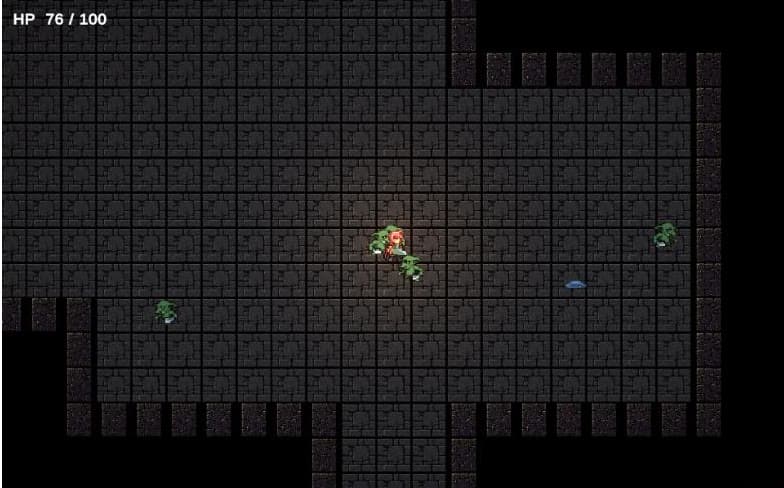
B(or F9) jumps straight to the boss room — go fight the Molten Titan.
- MOVE
- W A S D
- ATTACK
- Click or J
- BLOCK
- Right-click or K
- DASH
- Shift
- ROLL
- Space
- BACK TO START
- F10
Games are content-hungry. A dungeon crawler needs dozens of rooms placed tile by tile, plus animated art in eight directions for every character. For one person, that hand-work is the wall most projects never get over.
Cinderfell is a top-down action-RPG built in Unity, and an early build — openly a work in progress. I'm showing it for what it took to get here in about a month.
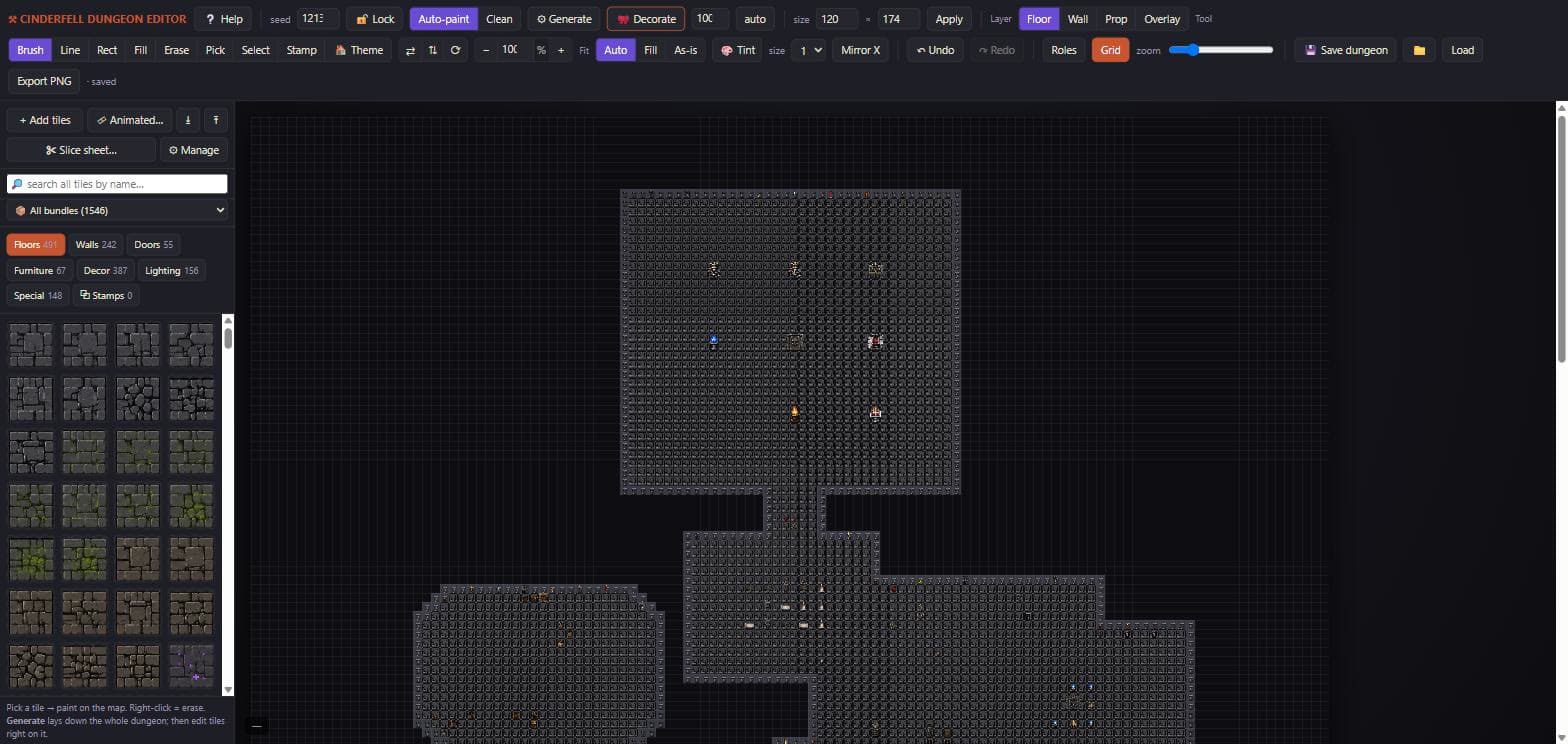
The part I'd point at first isn't the game, it's the level editor I built for it. It runs entirely in a browser and holds around 1,500 sorted, searchable tiles. Its auto-decorator furnishes a room in one click: it reads what kind of room it is and lays out a storage room, a crypt, or a shrine to match, while leaving every doorway clear. Hitting save writes the finished level straight into the game project — no exporting, no importing, no shuffling files between folders.
Inside the game, the dungeon layout is generated rather than hand-placed, enemies hunt you using flow-field pathfinding, and the character art came out of an automated sprite pipeline instead of being drawn frame by frame.
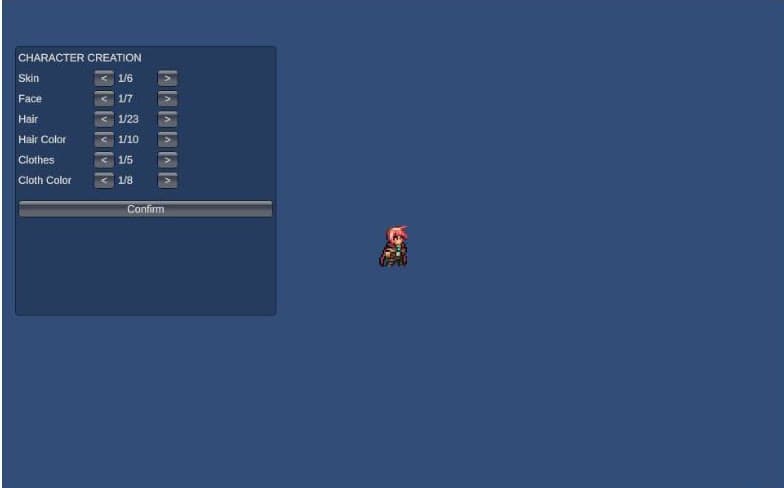
Playable right here in your browser. Design, combat feel, and art are all still being reworked — this is a build in progress, not a finished game. What it does show is range: game engine, custom browser tooling, procedural generation, art automation, and a deployment pipeline, directed solo with AI pairing.
Have a problem like this one?
Describe it in your own words. I'll tell you what building the fix would actually involve.
Tell me the problem